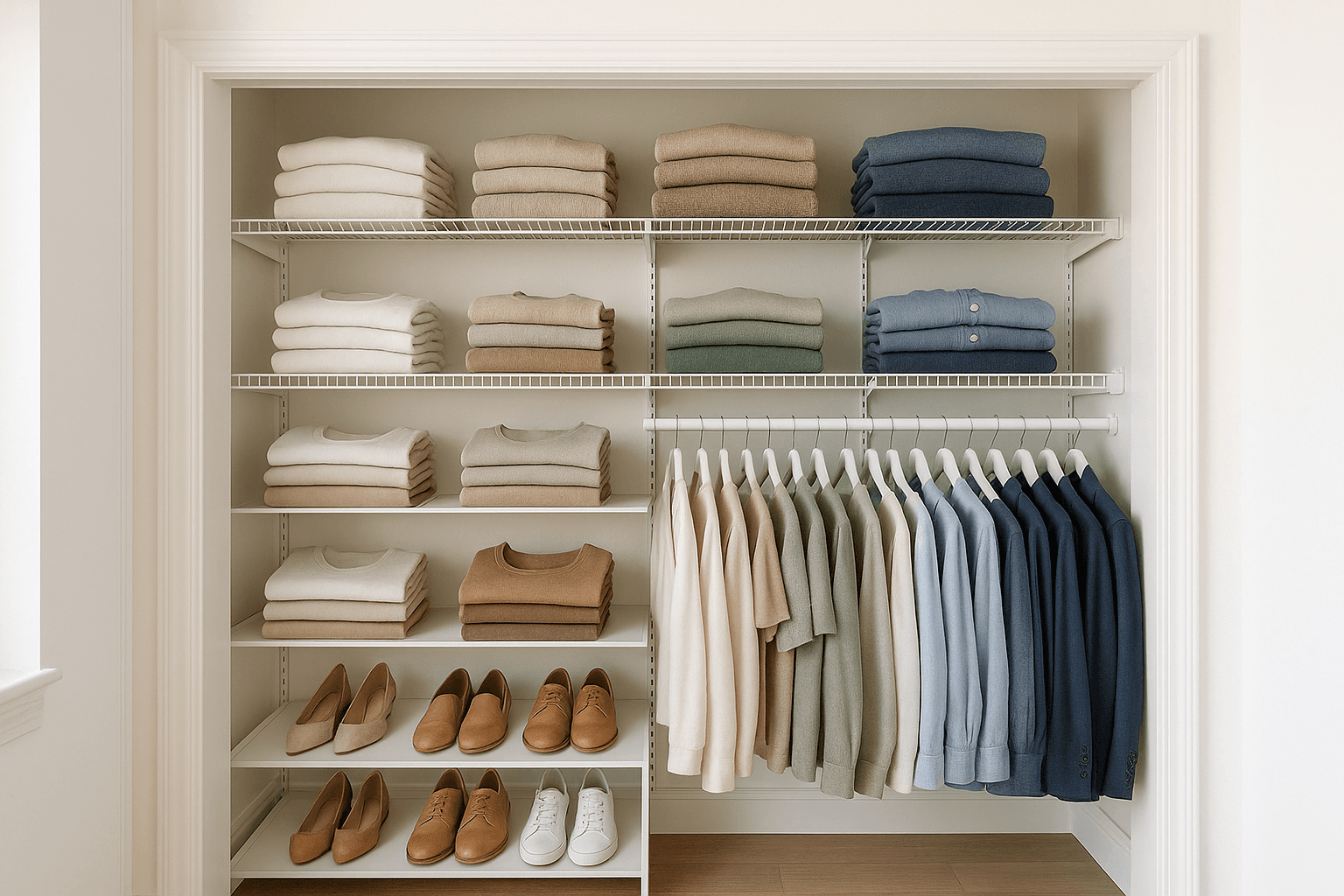
A closet stays organized when the setup matches how you get dressed. A common mistake is doing the work in the wrong order. People buy bins first and edit last.
This guide walks through closet organization in the order that works. It fits a small reach-in in a DC rowhouse. It also fits a big walk-in in the suburbs.
Take everything out first
Empty the whole closet. Put it all on the bed or the floor. It's hard to plan a space you can't see.
Wipe the shelves and vacuum the floor. Check the rod brackets and shelf supports while the closet is empty. Then measure the width, depth and height. Write the numbers down.
Give yourself enough time. A reach-in closet can take an afternoon. A large walk-in can take a full day or more.
Edit before you organize
Make a keep pile and a donate pile. Add one pile to sell and one to toss. Be honest about fit and use.
- Did I wear it in the last year?
- Does it fit right now?
- Would I buy it again today?
If you can't decide, put it in a "not sure" box. Write the date on the box and check it in three months. Anything you didn't miss can go.
Put the donate bags in your car the same day. Bags that sit in the hallway tend to drift back into the closet.
Editing is often the hardest part. If it feels like too much, a decluttering service in Washington DC can work through it with you.
Set up zones by how often you use things
Put what you wear most in the easiest spot to reach. That's usually between shoulder and knee height. Everything else goes higher, lower or further back.
- Prime zone. Everyday clothes, right at arm's reach.
- Top shelf. Off-season clothes, bags and keepsakes.
- Floor. Shoes and a laundry hamper.
- Back corners. Things you use a few times a year.
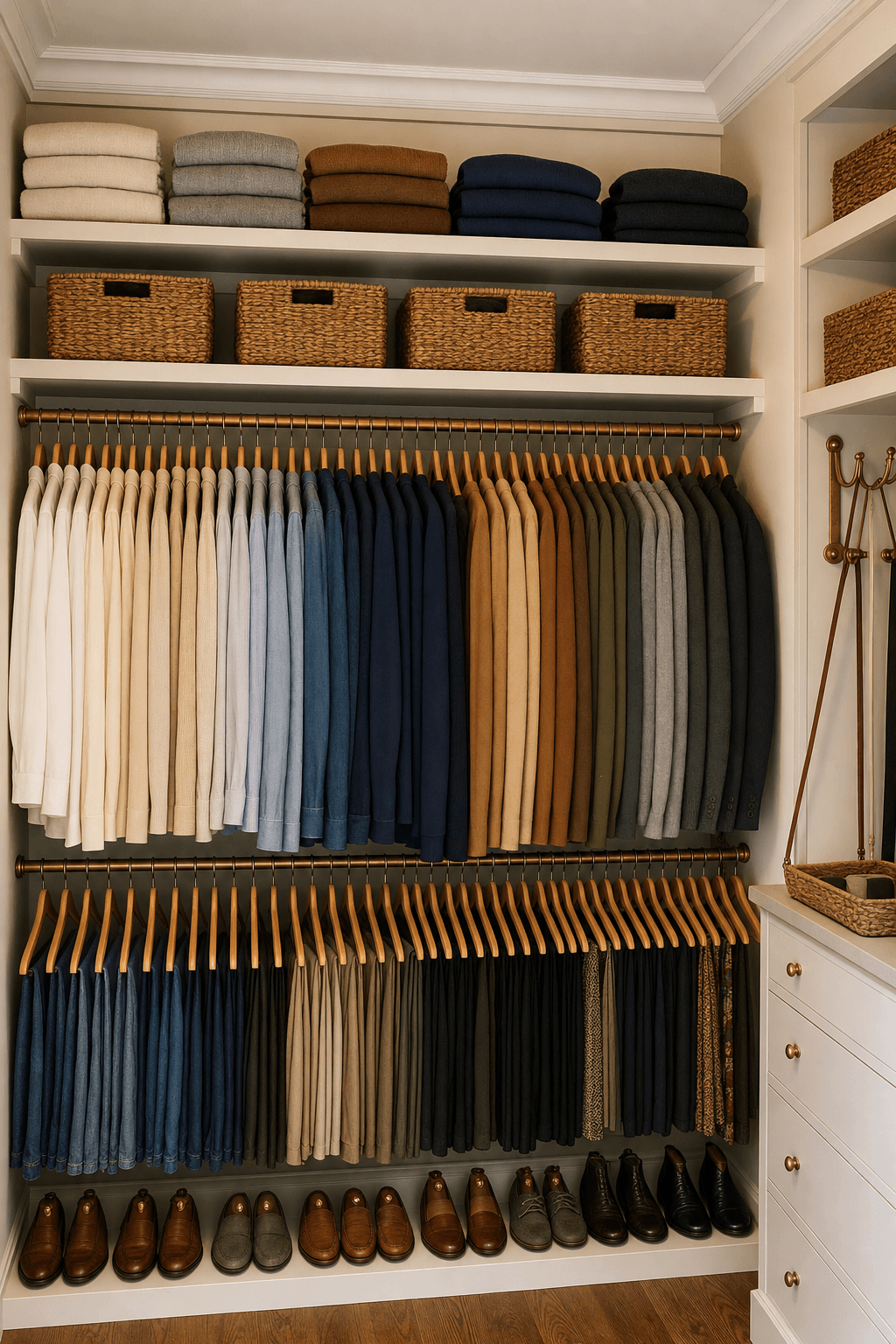
Group like with like. Shirts go with shirts and pants go with pants. Sorting by color inside each group makes things faster to find.
Most reach-in closets have one rod with a shelf above it. Adding a second rod below roughly doubles the hanging space for shirts and folded pants. A common setup puts the top rod around 80 inches high and the lower rod around 40 inches. Keep one section with a single rod for coats and long dresses.
What to hang and what to fold
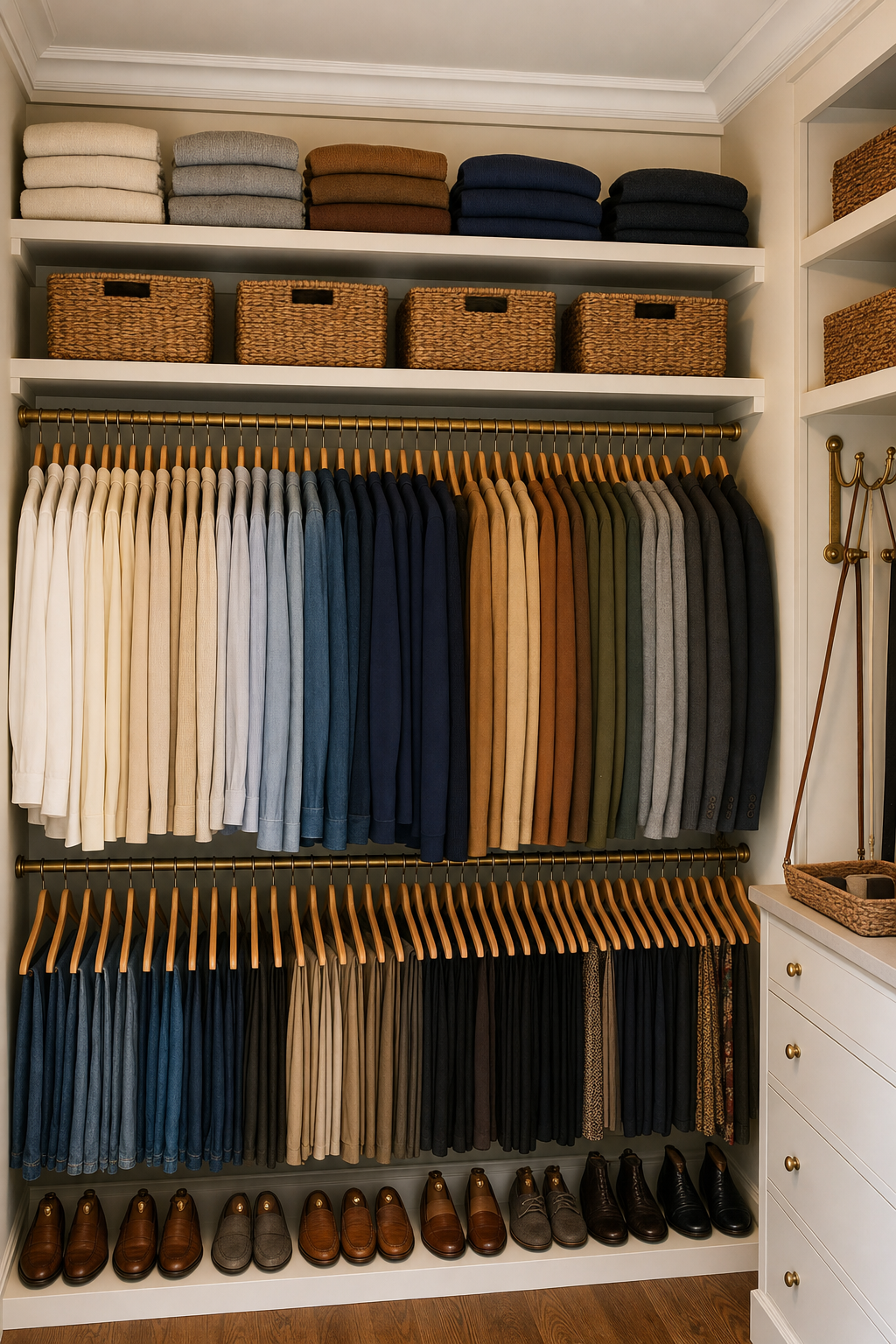
Hang anything that wrinkles or needs to keep its shape. Shirts and dresses belong on the rod. So do jackets and dress pants.
Fold sweaters and other knits. They stretch out on hangers over time. If rod space is tight, fold jeans and T-shirts too.
Keep folded stacks on shelves with dividers. In drawers, fold clothes so they stand up in rows. That way you can see every piece at once.
Pick storage last
Buy containers after you edit and measure. Then you know exactly what needs a home.
- Matching slim hangers. They take less rod space than bulky plastic ones.
- Shelf dividers. They keep sweater stacks from tipping over.
- Labeled bins for high shelves. You can see what's inside without pulling everything down.
- Drawer inserts. They work well for socks and belts.
- Over-the-door racks. They hold shoes or accessories in a small closet.
If the closet is dark, add a battery LED light inside. It's hard to keep a closet neat when you can't see the back of it.
Thinking about a full shelving system instead? Here is what closet systems cost in DC.
Tips for small closets in older homes
Many older DC rowhouses and condos have small, shallow reach-in closets. Older colonials in Bethesda and Chevy Chase often do too. A closet that small needs every inch to work.
- Use the back of the door for hooks or a slim rack.
- Add a second shelf above the first one if there's height.
- Store off-season clothes in bins under the bed.
- Use slim hangers for everything so more fits on the rod.
Want help with a tight closet? See our pages for a home organizer in Washington DC and a professional organizer in Bethesda, MD.
Walk-in closets need a plan too
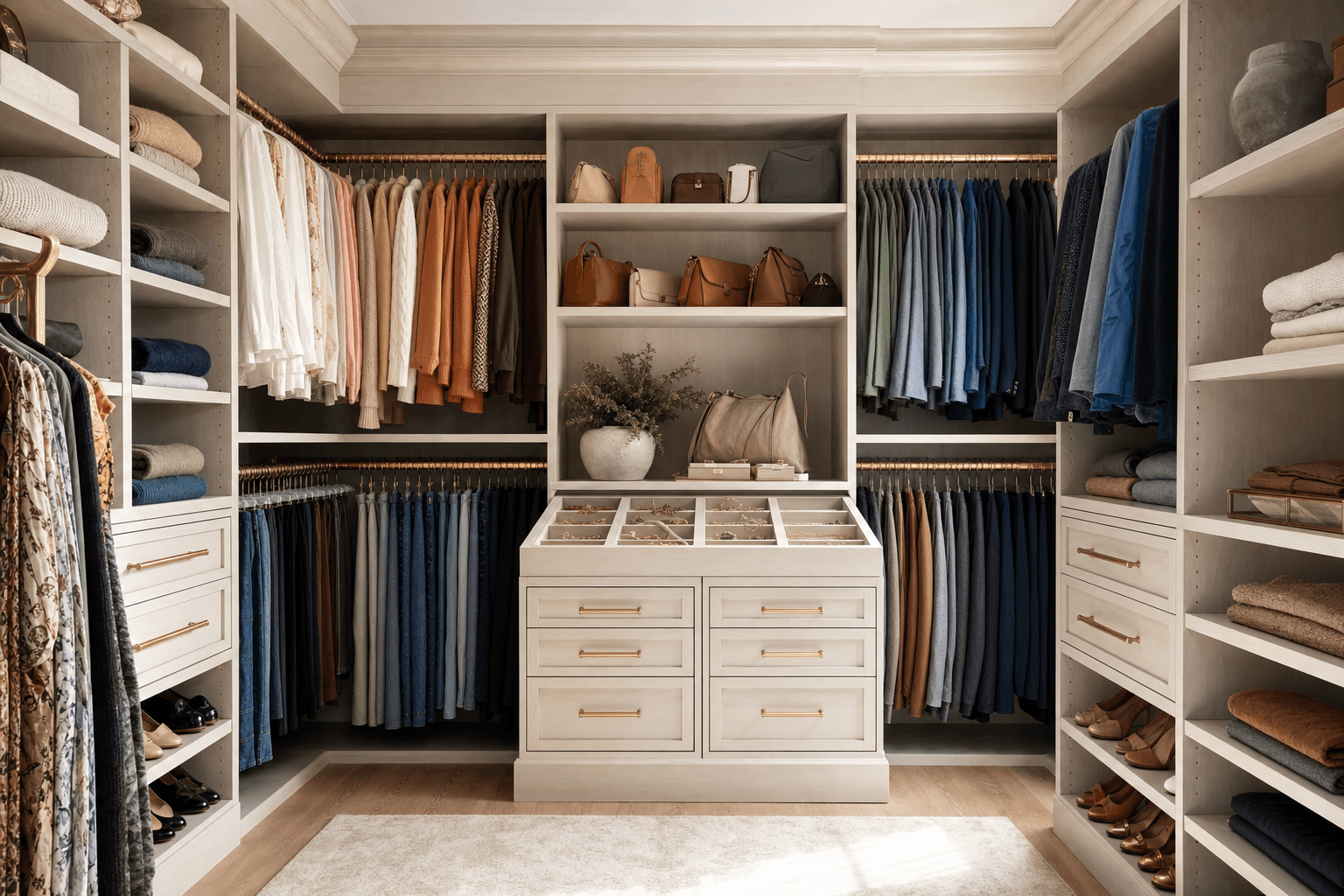
A big walk-in can get messy fast because there's room to drop things. Zones matter even more here. Give each person their own side or section.
Keep a hamper and a small donation bag in the closet. Then dirty clothes and giveaways have a place to go.
Many newer homes in Montgomery County have walk-in closets. If yours needs a plan, our closet organizers in Montgomery County can help.
Kids' closets
Set the rod low enough for your child to reach. An adjustable rod can move up as they grow. Open bins work better than bins with lids.
For younger kids, put a picture label on each bin. Then they can put things away without asking where they go.
Keep it organized with a simple routine
- One in, one out. When something new comes in, something old goes.
- A weekly reset. Take five minutes to put stray items back in their zones.
- A seasonal swap. Twice a year, switch summer and winter clothes. Edit as you go.
- The hanger test. Turn all your hangers backward. Flip each one after you wear that item. After six months, take a hard look at anything still backward.
When to get help
Some closets keep falling apart no matter what you try. Maybe there's too much in the house overall. Maybe you're moving or short on time. That's when professional closet organization can make sense.
We empty the closet and edit with you. Then we set up zones and storage that fit the space. For a free estimate, call (202) 836-6516 or send a note using the form below.