Why DC closets are a particular challenge
Washington DC has two closet problems that don't show up much in other cities. The first is age. A lot of DC's most desirable housing stock is pre-1960 — Georgetown rowhouses, Capitol Hill Victorians, Cleveland Park Colonials. Those homes were designed in an era when people owned less stuff. The primary closet in a 1940 Georgetown rowhouse is often 4 feet wide with a single rod and a shelf. That's it.
The second problem is the condo boom. A lot of DC's newer buildings — especially in Logan Circle, Shaw, and NoMa — were designed to maximize square footage on the floor plan, which means the closets are technically present but barely functional. A reach-in that's 24 inches deep and 5 feet wide sounds fine until you're actually trying to store a winter wardrobe plus luggage.
A professional closet system doesn't add square footage. What it does is convert unused cubic footage — the dead space above the rod, the floor area that becomes a pile — into something actually usable.
The three system types and what they cost in DC
Most closet organizer installations fall into one of three categories. The right one depends on your budget, how long you plan to stay, and how much you care about the look.
Wire shelving ($400–$800 installed)
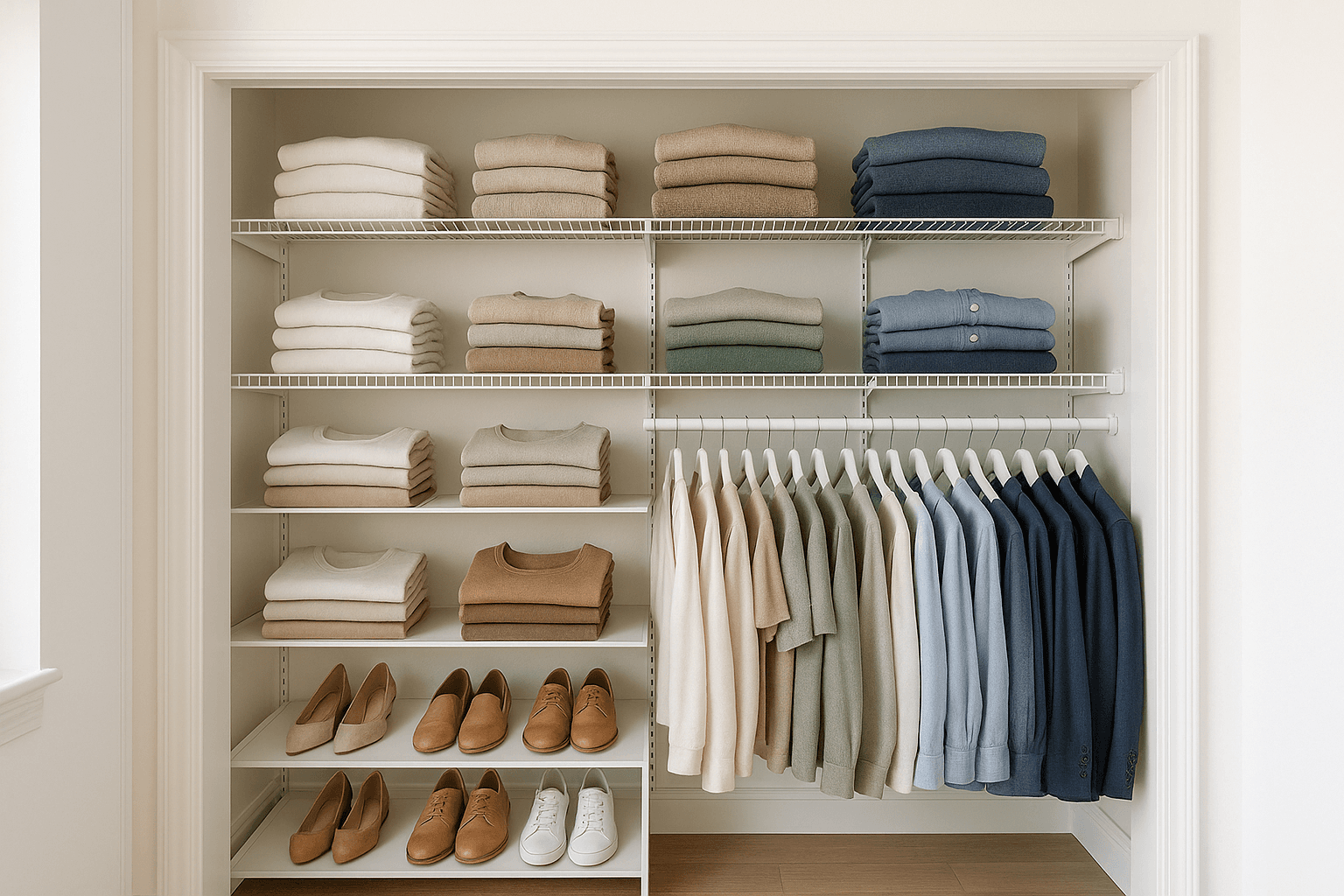
Wire systems — ClosetMaid, Rubbermaid Configurations, Elfa wire — are the entry point. They're ventilated, which is good for clothes, and they work in almost any closet footprint. An Elfa wire system for a 6-foot reach-in, installed by a professional, runs $400 to $700 including the rails, brackets, rods, shelves, and installation labor. Add a second rod configuration and you're closer to $800.
Wire is the right call if your budget is tight, you're renting (most wire systems can be removed cleanly), or you're in a second bedroom or guest closet where the look doesn't matter much.
Laminate / melamine systems ($1,200–$3,500)
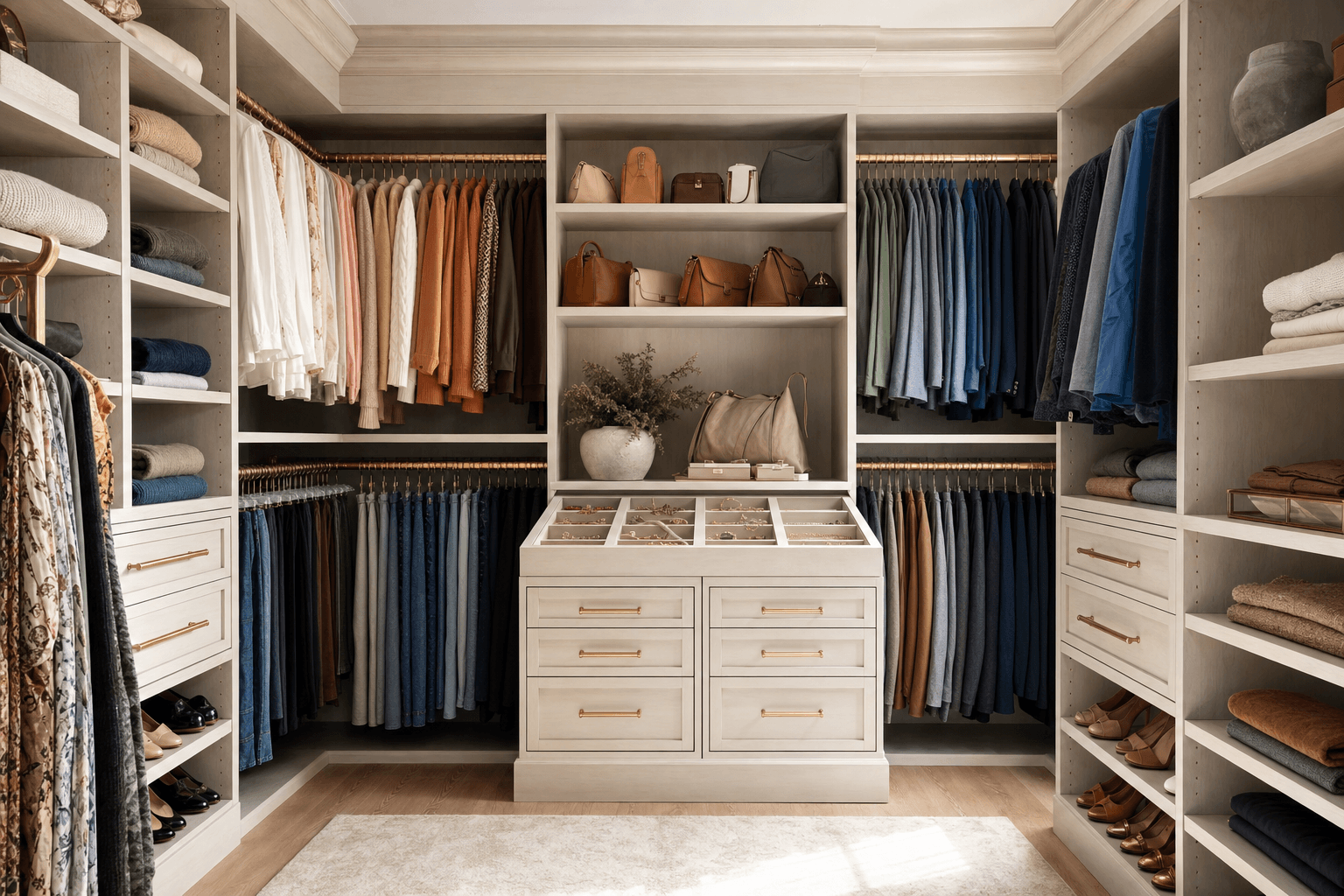
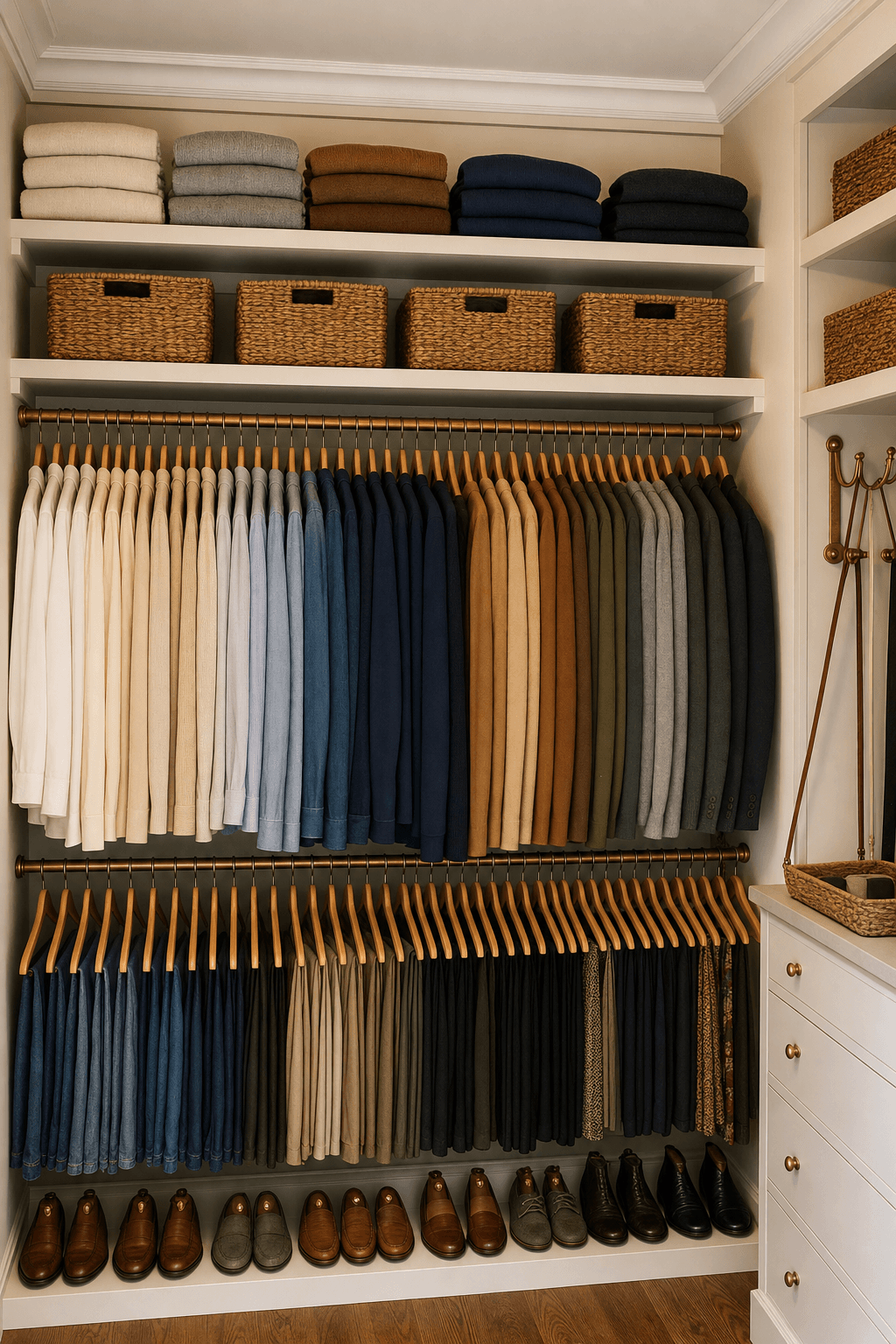
This is where most DC homeowners land. Laminate systems from California Closets, Inspired Closets, or a local fabricator use white or wood-grain melamine panels. They look finished — not builder-grade, not custom-cabinetry either, but genuinely nice. A reach-in closet done in laminate with double-hang sections, a drawer bank, and adjustable shelving runs $1,200 to $2,000. A walk-in primary closet with his-and-hers sections, a center island, and mirror-panel doors runs $2,500 to $3,500.
Laminate is a good permanent investment. The panels don't flex, the drawers glide well, and the system adds real resale value in a market where buyers look at closets carefully.
Custom wood ($3,000–$8,000+)
Custom wood — solid maple, cherry, walnut, or painted MDF with dovetail drawers and inset hardware — is the top of the range. It's built to spec for your closet dimensions rather than assembled from modular components. A modest primary walk-in in painted MDF starts at $3,000. A full Georgetown rowhouse primary in hardwood maple with pull-out accessories can run $6,000 to $8,000 or more. This is cabinetry-quality work and it prices accordingly.
2026 pricing at a glance
| System type | Typical closet | Installed cost |
|---|---|---|
| Wire shelving (Elfa) | 6-ft reach-in | $400–$800 |
| Laminate / melamine | Reach-in with drawers | $1,200–$2,000 |
| Laminate / melamine | Walk-in primary | $2,500–$3,500 |
| Custom wood (painted MDF) | Walk-in primary | $3,000–$5,500 |
| Custom wood (hardwood) | Walk-in primary | $5,500–$8,000+ |
DC neighborhoods we work in
The team runs closet projects across the DMV. The neighborhoods that come up most often:
- Georgetown: Pre-war rowhouses with small primary closets that need creative double-hang and shelf configurations to hold a full professional wardrobe.
- Capitol Hill: Victorian rowhomes with angled ceilings in the upper floors — reach-ins here are often irregular shapes that modular systems can't accommodate cleanly. Custom fab is more common on the Hill than elsewhere.
- Chevy Chase DC: Larger homes with larger closets. These projects tend toward full walk-in builds with center islands and full-length mirror sections.
- Bethesda: Colonials with decent closet volume but builder-grade wire that's never been upgraded. Laminate replacement is the most common ask here.
- Alexandria: A mix of Old Town rowhouses (small closets, historic trim constraints) and newer suburban builds with bigger footprints but cheap installed systems that fail quickly.
What a professional installation gets you that a DIY kit doesn't
You can buy a ClosetMaid kit at Home Depot for $200 and install it yourself in a day. Some people should do exactly that. Here's where the professional version is worth the difference.
The first is the layout. Walk into a 10-by-8 walk-in with a measuring tape and you'll see one configuration. A professional organizer who has designed a few hundred closets sees four or five — and knows which one will work for someone who hangs 60 percent of their wardrobe and folds 40 percent versus someone who does the opposite. That's not a trivial difference. The wrong layout in a custom system is expensive to undo.
The second is the actual structural installation. DC rowhouses have plaster walls that behave very differently from drywall when you're anchoring a system that will eventually hold 200 pounds of hanging clothes. Getting that wrong doesn't show up immediately — it shows up six months later when the rod pulls out of the wall at 6:45 AM.
Third is the warranty. Any reputable professional installer warranties the system and the installation separately. If a drawer fails or a bracket shifts, there's a number to call. That's worth something when you've spent $2,500.
What to do before we come for an estimate
Three things that make the estimate faster and more accurate. First, clear the closet as much as you can — we need to see the walls, the floor, and the ceiling height. Second, bring a rough sense of what you actually store: how many hanging items, how many folded, whether shoes live in the closet or elsewhere. Third, take a photo or two of closets you like (Pinterest, a friend's house, a hotel room that worked really well). The visual reference saves a lot of back-and-forth.
You don't need to know what system you want before calling. That's the conversation we have at the estimate.
Ready to schedule a free estimate?
We offer free written estimates for closet organization projects across DC, Maryland, and Virginia. Estimates come back within 48 hours and include a layout recommendation, a product breakdown, and a not-to-exceed total. No surprise invoices at the end.